
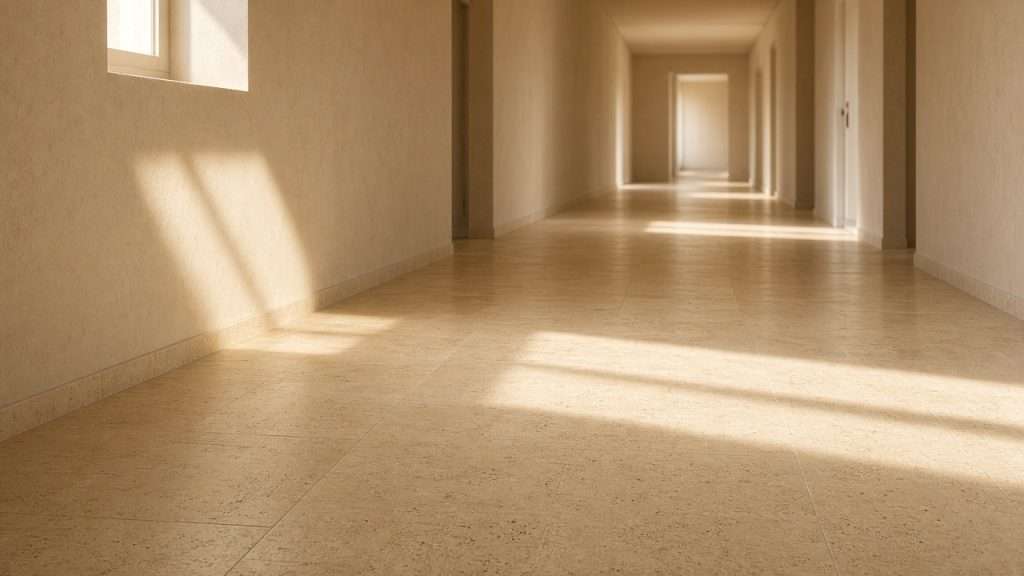
Travertine adds a warm, earthy look to floors, patios and showers. It is also soft and full of tiny pores, so it needs gentler care than many other surfaces.
Here is a simple guide to cleaning it safely.
Why Travertine Is Sensitive
Travertine is a natural limestone with small holes and channels. Acids can dissolve the surface, and dirt can settle into the pores.
That is why the wrong cleaner can leave dull spots.
What to Use
- A pH-neutral stone cleaner.
- Warm water and a soft mop or cloth.
- A soft-bristle brush for textured areas.
- A clean, dry cloth to finish.
What to Avoid
- Vinegar, lemon and other acidic cleaners.
- Bleach and harsh bathroom sprays.
- Abrasive powders and stiff brushes.
- Steel wool or rough pads.
Routine Cleaning Steps
- Sweep or dust mop to remove grit.
- Mop with a diluted stone cleaner, working in sections.
- Rinse with clean water.
- Dry with a soft cloth to avoid streaks.
Dull or Stained Travertine
If travertine looks flat or stained despite regular cleaning, the surface may need more than a mop. Deep cleaning can lift ground-in dirt from the pores.
Our travertine tile cleaning service is built for exactly that.
Sealing and Honing
Sealing helps keep liquids from soaking in, and we suggest resealing about every 2 years, with 24-48 hours before regular use. See tile and grout sealing.
For a smoother, more even finish, ask about stone honing or stone polishing.
When to Call a Pro
If you have a large floor, a stone shower or heavy staining, an expert assessment saves guesswork. We can recommend the right steps for your travertine.
Tips for Floors, Showers and Patios
Indoor floors mostly need regular dust mopping and a gentle damp mop. Shower travertine needs squeegeeing and a soft cleaner to keep soap film from building up.
Outdoor travertine collects dirt, pollen and algae more quickly. Our outdoor tile cleaning page explains how we handle patios and pool surrounds.
Small Habits That Protect Travertine
Use mats at doors and felt pads under furniture. Wipe spills right away, particularly anything acidic like wine, juice or soda.
These little steps keep the surface cleaner and make deep cleaning easier whenever you need it.
Why Gentle Wins
With travertine, more force is rarely the answer. Patient, gentle cleaning with the right product protects the finish and the surface.
A little regular care also makes each deep clean easier and more effective.
Travertine Finishes: Filled and Unfilled
Some travertine has its natural holes filled during manufacturing and some is left open. Either type responds to the same gentle approach, though open-pore travertine holds dirt more readily.
If you are unsure which you have, mention it when you call and we will take a look.
Spill Response
Blot, do not wipe. Wiping spreads liquid across the surface, while blotting lifts it.
Follow with a damp cloth and a dry one. For anything sticky or oily, a drop of stone-safe cleaner helps.
Seasonal Care
Spring and fall are good moments to give travertine a deeper look. Check entrances for grit, patios for algae and showers for film.
Scheduling a clean around the seasons keeps the stone fresh without much effort.
Frequently Asked Questions
Can I use vinegar on travertine?
No. Vinegar is acidic and can etch travertine.
Should travertine be sealed?
Yes, sealing helps reduce staining. Reseal about every 2 years.
Why are there holes in my travertine?
These are natural pores. They can collect dirt, so deep cleaning helps keep them clear.
Ready for a quote? Call us at 888 294 0404 or request a quote online. We serve the Bay Area, Los Angeles, Orange County and San Diego, and we are happy to talk through your tile, stone and grout.